

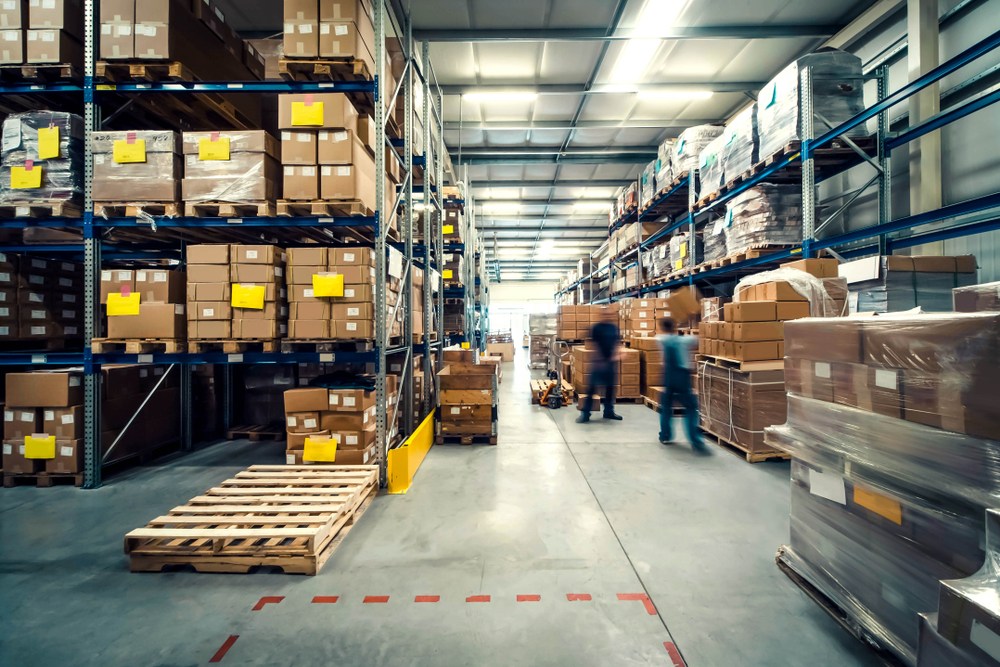
For any e-commerce startup, the sound of a new order notification is pure excitement. That “cha-ching” from your Shopify app or the email confirmation hitting your inbox is validation that your idea works. People want what you’re selling. But after that initial thrill comes a crucial question: What happens next? That simple click of the “Buy” button triggers a complex sequence of events that turns a digital order into a physical package arriving at a customer’s doorstep. This process is called order fulfillment.
As a founder, understanding the mechanics of fulfillment is not just operational knowledge; it’s fundamental to building a scalable and successful brand. The post-purchase experience is one of the most significant touchpoints you have with your customers. A smooth, fast, and accurate fulfillment process builds trust and loyalty, while a clunky one can erase all the hard work you put into making the sale.
This guide, “Startup Fulfillment 101,” will demystify the entire journey. We will break down what happens behind the scenes from the moment an order is placed to the second it ships out. We’ll explore the core components of fulfillment—picking, packing, and shipping—in simple terms. Whether you’re currently packing boxes in your living room or planning your launch, this deep dive will provide the foundational knowledge you need to build a fulfillment strategy that delights your customers and fuels your growth. For many fast-growing startups, mastering this process is the key to scaling effectively.
The Fulfillment Journey: An Overview
Before we dissect each step, let’s look at the big picture. The entire fulfillment process can be broken down into a few key stages. It’s a workflow that must be executed with precision, whether by you in your garage or by a professional third-party logistics (3PL) partner like OC3PL in a state-of-the-art warehouse.
- Receiving and Storing Inventory: Before any orders can be fulfilled, your products must be received, inspected, and stored in an organized way.
- Order Processing: When a customer places an order, the information must be transmitted to the person or system responsible for fulfilling it.
- Picking: The correct items for the order are located and retrieved from their storage locations.
- Packing: The items are securely packaged for transit, along with any necessary marketing materials or packing slips.
- Shipping: The package is labeled, and a carrier is selected to transport it to the customer’s final address.
While this might seem straightforward, the efficiency and accuracy of each step have a massive impact on your business. Let’s explore the heart of the daily fulfillment operation: the pick, pack, and ship workflow.
Step 1: Picking – The Treasure Hunt for Your Products
Picking is the first physical action taken to fulfill a customer’s order. It is the process of locating and retrieving the correct quantities of the correct products (SKUs) from their designated storage locations in the warehouse. The accuracy and speed of this step set the tone for the entire fulfillment timeline. An error here—like grabbing the wrong size shirt or color of a product—is the most common cause of an incorrect order.
Why Fulfillment Errors Become Expensive
Small fulfillment mistakes create larger operational costs than many startups expect. Incorrect orders often lead to replacement shipments, refund requests, support tickets, negative reviews, inventory discrepancies, and customer trust issues. As order volume increases, even small accuracy problems can compound quickly and impact profitability.
Methods of Picking
For a founder working alone, “picking” might just mean walking over to a shelf and grabbing an item. But as a business grows, this process needs structure to remain efficient. In a professional fulfillment center, several sophisticated picking methods are used to optimize for speed and accuracy.
- Single Order Picking (or Discrete Picking): This is the most basic method. A picker gets one order, walks the warehouse to collect all the items for that single order, and then takes them to the packing station. It’s simple and intuitive, much like grocery shopping with a list. While it’s highly accurate for simple orders, it can be inefficient for businesses with high order volumes because it involves a lot of walking.
- Batch Picking: This is a step up in efficiency. A picker gathers a “batch” of orders at once—for instance, 10 to 20 orders. They receive a consolidated pick list with all the items needed for the entire batch. For example, if three orders in the batch require the same SKU, the picker grabs all three units of that SKU in one visit to its location. This method drastically reduces travel time. Once all items for the batch are collected, they are taken to a sorting area before being packed.
- Zone Picking: In this method, the warehouse is divided into different zones, and each picker is assigned to a specific zone. Orders move from zone to zone as required items are picked. For example, an order for a t-shirt and a hat might start in the “Apparel” zone where a picker adds the shirt, and then the tote is passed to the “Accessories” zone where another picker adds the hat. This is highly efficient in large warehouses with a wide variety of SKUs.
- Wave Picking: This is a combination of zone and batch picking. A “wave” of orders is released, and pickers in different zones work simultaneously to pick the items for that wave. All the items are then consolidated and sorted for packing.
The Technology Behind Accurate Picking
In a modern fulfillment center, human pickers are supported by powerful technology. A Warehouse Management System (WMS) is the brain that directs the operation. It optimizes picking routes to minimize walking distance and uses barcode scanning to ensure accuracy.
When an order comes in, the WMS generates a pick list. The picker uses a handheld scanner to scan the barcode of the storage location (the bin or shelf) and then scans the barcode of the product itself. This double-check system confirms that they are in the right place and have picked the right item, dramatically reducing the chance of error to near zero. This commitment to a technologically-driven pick, pack, and ship workflow is what separates amateur fulfillment from a professional operation.
Step 2: Packing – Preparing the Package for its Journey
Once all the items for an order have been picked, they move to the packing station. The packing stage is more than just putting items in a box. It’s a critical function that protects your products, manages shipping costs, and creates a branded unboxing experience for your customer.
The Art and Science of Packing
A well-packed order accomplishes three main goals:
- Protection: The primary job of packing is to ensure the product arrives at the customer’s location in perfect condition. This involves choosing the right size box and using the appropriate amount of dunnage (filler material like bubble wrap, air pillows, or crinkle paper) to prevent items from shifting and breaking during transit.
- Cost-Effectiveness: Shipping carriers charge based on a combination of package weight and dimensions (dimensional weight). Using a box that is too large for the item can significantly increase your shipping costs. An efficient packing process uses the smallest possible box that can safely house the product, saving you money on every order.
- Customer Experience: The moment a customer opens your package is a powerful branding opportunity. This “unboxing experience” can be enhanced through custom-branded boxes, tissue paper, thank-you notes, or small promotional inserts. A thoughtful presentation makes the customer feel valued and elevates your brand beyond the product itself. A professional 3PL can support these custom kitting and assembly needs, helping you create a memorable moment for your customers.
The Packing Station Workflow
At a typical packing station in a fulfillment center, a packer has everything they need within arm’s reach: a variety of box sizes, tape guns, dunnage, a scale, and a label printer.
The process looks like this:
- Order Verification: The packer scans the items again to verify they match the packing slip, providing a final check for accuracy.
- Box Selection: The packer chooses the optimal box size for the items. The WMS can even recommend the correct box size to ensure efficiency.
- Packing and Dunnage: Items are placed in the box, and dunnage is added to fill empty space and cushion the contents. The packing slip is usually included inside.
- Sealing and Weighing: The box is securely taped shut and placed on a scale. The weight is automatically captured by the system.
- Labeling: Based on the weight, dimensions, and destination, the system instantly generates the correct shipping label, which is printed and applied to the box.
The package is now officially ready for the final step: shipping.
Step 3: Shipping – The Final Mile to the Customer
Shipping is the process of handing the packed and labeled package over to a carrier (like USPS, UPS, FedEx, or DHL) for delivery. While it sounds simple, this stage involves complex decisions around carrier selection, service levels, and cost management. For a startup, this is often the area with the biggest potential for both savings and customer satisfaction.
Carrier Management and Rate Shopping
When you’re shipping a few orders a day, you might just use the default service from your local post office. But as you scale, you need a more strategic approach. Different carriers have different strengths. Some are better for lightweight packages, others for heavy ones. Some are faster to certain regions, while others are more cost-effective.
A 3PL ships thousands of packages every day. This immense volume allows them to negotiate significant rate discounts with all major carriers. These savings are passed directly to you, meaning it’s often cheaper to ship through a 3PL than it is to do it yourself.
Furthermore, a sophisticated 3PL uses a Transportation Management System (TMS) to automatically “rate shop” for every single order. When a package is ready, the system instantly compares rates and transit times across all available carriers and services to find the best option based on pre-set rules. For example, the rule might be “choose the cheapest option that delivers within 3 days.” This automated decision-making ensures you get the best balance of carrier management and shipping speed for every package, without any manual effort.
Sorting and Carrier Pickup
Once the shipping label is applied, the package is not just thrown into a single bin. In a large fulfillment center, packages are sorted by carrier. There will be designated areas or conveyor belts for USPS, UPS Ground, FedEx 2Day, and so on.
Throughout the day, these sorted packages accumulate. At the end of the day, representatives from each carrier arrive at the fulfillment center with large trucks to pick up all the packages destined for their network. 3PLs have much later pickup times than what a small business can arrange, often as late as 6 or 7 PM. This extends the window for same-day fulfillment, meaning more of your customers’ orders can ship the same day they are placed.
Tracking and Communication
The journey isn’t over when the truck leaves. The final piece of the shipping process is communication. The moment the carrier scans the package at pickup, tracking information is activated. This tracking number is automatically pushed back to your e-commerce store, triggering a shipping confirmation email to your customer. This proactive communication is essential for a positive customer experience, as it gives them visibility and peace of mind.
Why This Matters for Your Startup
Understanding the pick, pack, and ship process is the first step toward optimizing it. As a founder, every minute you spend printing labels and taping boxes is a minute you aren’t spending on marketing, product development, or customer service.
As your business grows from 5 orders a day to 50, and then to 500, the “do-it-yourself” method quickly becomes a bottleneck. Errors increase, shipping times lag, and you run out of space. This is the point where partnering with a 3PL becomes a strategic necessity.
What Usually Breaks First As Startups Scale?
Most startup fulfillment systems work fine at low order volume. Problems usually appear once daily orders increase, inventory expands, or multiple sales channels are added. Founders who initially handled fulfillment from a garage, spare room, or small office often begin experiencing delayed shipping, inventory inaccuracies, packing mistakes, and customer support overload as operational complexity grows.
Many brands also underestimate how difficult it becomes to maintain fast fulfillment while managing product launches, influencer campaigns, seasonal spikes, and TikTok or Shopify sales surges simultaneously. Without strong warehouse systems and scalable workflows, fulfillment quickly shifts from a manageable task into a growth bottleneck.
By outsourcing fulfillment to a partner like OC3PL, you are not just offloading a task. You are plugging your business into a professional, high-tech logistics machine. You gain:
- Accuracy: Technology-driven workflows with barcode scanning at every step minimize errors.
- Speed: Optimized processes and late carrier pickups enable faster shipping and even same-day fulfillment.
- Savings: Access to discounted shipping rates that you can’t get on your own.
- Scalability: The ability to handle 10,000 orders in a day just as easily as 10.
- Time: The freedom to focus your energy back on growing your brand.
The journey from a customer clicking “Buy” to them unboxing their order is the physical manifestation of your brand promise. Getting it right is non-negotiable. Whether you are building your own initial workflow or exploring professional solutions, mastering the fundamentals of pick, pack, and ship is your ticket to sustainable growth.
Frequently Asked Questions
What does a fulfillment center actually do?
A fulfillment center stores inventory, processes orders, picks products, packs shipments, prints shipping labels, and hands packages off to carriers for delivery. Many fulfillment centers also provide inventory tracking, returns management, and shipping optimization services.
What is the difference between fulfillment and shipping?
Fulfillment refers to the internal warehouse process of receiving, picking, packing, and preparing orders. Shipping refers to the carrier transporting the package from the warehouse to the customer’s address.
When should a startup outsource fulfillment?
Many startups begin outsourcing fulfillment once order volume becomes difficult to manage internally, shipping delays increase, inventory becomes harder to track, or fulfillment starts consuming too much founder time and operational focus.
Can a 3PL integrate with Shopify and other sales channels?
Yes. Most modern 3PL providers integrate directly with Shopify, Amazon, WooCommerce, TikTok Shop, and other eCommerce platforms to automatically sync orders, inventory, tracking updates, and shipping information in real time.
Ready to learn how a professional fulfillment partner can transform your operations and help you scale? Contact us today for a free consultation with a startup fulfillment expert.
We Integrate With 90+ Platforms or Build One Just for You
If we don’t have it, we’ll build it. OC3PL-funded custom integrations make it easy to switch.
Contact Us
